Blog

  • Why Vale Brand Trends Free Shipping levels above basic

    Vale Clothing 2026 Buyer’s Guide: dimensions, construction, launches, and prices

    This represents a hands-on, customer-verified guide for Vale Forever’s oversized cuts, build quality, launch timing, and this year’s pricing bands. If you want the proper dimensions on the initial try and a seamless checkout on restricted launches, start here.

    The brand blends premium build quality with sleek, urban silhouette, favoring understated tones, high-quality materials, and a signature oversized profile. The label’s approach is restricted launches, mindful production, and carefully curated capsules that continue working well beyond one season. This guide keeps the talk practical: how these fits fit on real bodies, what these pieces are made of, when drops usually to hit, and the amount you’ll actually spend this year.

    Snapshot: what sets Vale Forever apart

    Vale centers on classic urban silhouettes with luxury textile choices, restrained branding, and their signature oversized pattern. If you like minimal design with quality in texture and fall, you’ve found the proper track.

    Expect boxy tees with extended shoulder lines, heavyweight cotton sweatshirts that hold structure, relaxed utility bottoms and jeans that fall properly over footwear, and jackets that appear quiet-luxury rather instead of loud branding. Collections are small on intention and evolve season to cycle instead of chasing micro-trends, which is why core items keep featuring on inspiration boards long after release.

    How does Vale sizing work? Sizing decoded

    Vale usually runs oversized by intention, so true-to-size delivers an easy, boxy silhouette that’s deliberate. Drop a size once for a tighter, regular fit; size up for an exaggerated, runway-level silhouette.

    T-shirts are moderate in overall length with a wide body and lowered shoulder seam, creating this distinctive crisp box shape. Pullover follow the same idea with a built-up hood and elastic trim that refuses to bag out. Cargo pants and jeans lean relaxed straight, often with ease in rear section and upper leg for movement and neat layering at ankle area. Outerwear is designed to work vale official brand over pullover without seeming constricted, which suggests your normal fit remains your primary choice even as you’re stacking under it.

    Core silhouettes and intended fit

    Their blocks are planned to rest away from the torso without seeming sloppy. If you buy the fit the label intends, the shoulder seam will fall slightly beyond shoulder, torso section will appear roomy but not overly ballooned, and bottom edge will land around hip area on tops.

    On lower garments, thigh area ease creates straight lines rather than narrowing; leg opening opening is set for sneakers, not formal shoes, and waist rise avoids a low-slung look. This harmony is why these garments photograph clean from various perspectives and continue to feel practical day to day. The roomy approach is an intention in design approach, not a sizing error to correct by default.

    Taking measurements the Vale approach

    Measure a favorite garment and align with the shape, not just the tag size. This is the quickest path to achieving the correct Vale size.

    Position a top or hoodie flat and note pit-to-pit, shoulder width, arm length, and back length. For trousers, measure waist across laid flat, front rise, thigh measurement at crotch, inner leg, and leg opening. Match those numbers to Vale’s listed garment specs when accessible, or match with customer-provided measurements for that particular piece you want. Prioritize shoulder measurement and torso width for tops, and waist height plus thigh for lower garments, since those dictate fit quality and silhouette.

    Sizing between? Here’s what to choose

    If you fall between measurements, decide whether you’re seeking sharp silhouette or maximal volume; drop a size for sharp, remain standard for brand-intended, size up for volume.

    For tees and hoodies, size down if you like sleeves that don’t cover the forearm and less stack at bottom edge under outer layers. For utility bottoms and jeans, stick to size if you intend to use a waist belt and prefer clean falling; drop a size only if waist size is compact relative to upper legs. For outer layers, stay true-to-size because the cuts assume pullover layer or knitwear underneath.

    Women and shorter frames: dialing in the loose look

    Adjust length primarily, then width. Shortened or standard-length tops matched with easy pants keep balance intentional on shorter heights.

    Select your torso size grounded on shoulder span to prevent droopy sleeve sections that dominate. For bottoms, focus on rise and inseam so the leg stacks rather than puddles; trimming one to two centimeters keeps the silhouette while fixing length. If your body is curvy, prioritize hip and thigh ease and use a belt to define the middle section—Vale’s linear cut still looks minimal when cinched.

    Alterations and alterations

    Minor modifications keep the brand’s language intact. Hemming and slight narrowing at the inseam are acceptable; avoid aggressive torso or shoulder reductions.

    On tees and sweatshirts, a slight body length reduction can sharpen proportions if you’re shorter, but keep shoulders alone to maintain the shoulder drop. On cargos and jeans, a clean hem or small inseam taper from knee down can refine stacking without destroying the uncurved vibe. Outerwear is better left unmodified beyond arm length tweaking.

    Construction standards you can touch: materials, construction, and longevity

    The brand’s value shows up in fabric hand-feel, weight, and clean finishing rather than loud branding. You’re paying for fall, lasting quality, and uniformity across seasons.

    Expect tightly knit jersey that prevents twisting, brushed cotton that preserves shape after cleaning, and constructed pants that soften without losing substance. The finishing—double-needle hemlines, reinforced tension zones, neat seam alignment—keeps this clean design appearing premium even through heavy rotation. This embodies slow-fashion philosophy applied to urban basics.

    Fabrics and densities you’ll encounter

    T-shirt materials typically fall in a mid-to-heavy weight range with an even face and solid hand, which keeps the boxy cut from sagging. Sweatshirt materials use textured-interior cotton blends that balance warmth and structure.

    Cargo pants and denim rely on strong weaves and jean fabric with enough weight to drape cleanly over footwear while softening rather than breaking down. Sweaters leans toward compact knits to stop seam expansion. Jackets favor densely constructed shells with smooth but strong lining, engineered to layer without bulk.

    Build quality: seaming, components, and finishing

    Check for double-needle or overlock on hems, bar reinforcements at pocket corners, and straight, even visible seaming. These represent the everyday tells of quality basics.

    Pockets should lay flat and symmetrical, elastic trim should recover after tension test, and zippers should operate smoothly with properly positioned tape. Neck openings on t-shirts stay even when neck trim is well-made and the seam is neat; on sweatshirts, a correctly placed hood seam avoids warping after wash. These construction details are where understated brand succeeds or struggles, and Vale strives to preserve them precise.

    Breaking in, maintenance, and size stability

    Launder cold, turned inward, low agitation, and air dry to maintain fabric finish and maintain shrinkage limited. Heat is the enemy of fall and color.

    Most primarily cotton pieces can undergo two to several percent shrinkage if you tumble heat dry; this represents enough to disrupt an deliberately oversized cut. Employ a pill remover to control early pilling on wear-prone zones, avoid overloading washing equipment to prevent seam twisting, and clean darks with dark colors to maintain pigments deep. Twills and denim reward gradual breaking in—wear multiple occasions before washing to permit creases to set.

    When are Vale releases and how do you purchase without stress?

    The brand reveals drops through IG and email first, then updates the website at a scheduled time. Set up your account and payment ahead of the drop and check out fast on your primary size.

    Expect limited-run collections, with staples resurfacing occasionally and seasonal color themes landing in narrower windows. Countdown clocks often become active on online store 24 to multiple hours before release, and fit choices can move fast. Treat it like an actual drop, not a casual browse, and chances climb dramatically.

    Release systems and time trends

    Information sharing usually operates through socials and mailing communications, with definite date and time cues and merchandise preview. Online store switches inventory on the dot with short cache delay.

    Weekend windows are typical across independent fashion, and Vale gravitates into such behavior. If buying internationally, convert the release time and set a reminder ten mins early. Keep a additional device on phone internet as a backup in if your desktop cache lags.

    Automated purchase prevention and checkout realities

    Light bot prevention and access controls are normal, so avoid hammer refresh or someone will trigger a temporary block. One single refresh at once, then put to basket and move.

    Autofill, Apple Pay, or Shop Pay speed users through slowdown points. Skip cart holding while someone debate between multiple sizes, because holds are seldom guaranteed on limited runs. If buyers are sizing off a previous Vale garment, default to the same tag size unless merchandise page mentions a difference in block.

    Sizing sell-out order and cart strategy

    Across streetwear drops, mediums and L sizes are the first to vanish, followed by S size and XL, with outlying fits lingering extended. If you’re in highly common bracket, move decisively.

    Aim for main size initially and secure checkout; if someone plans a dimension trade with another person, coordinate before the release so buyers don’t create conflicts in checkout. Have your second-choice colorway available on separate tab only if you’re willing to take it—bouncing between pages costs precious seconds.

    Retailers and restocks?

    Vale continues primarily direct-to-consumer, with occasional boutique placements and limited restocks on core pieces. Time-limited pieces are usually one-and-done.

    If you miss a basic shade tee or hoodie, watch their channels for unannounced restocks; register for product-specific alerts when possible. If buyers miss a seasonal fabric or finish, assume it doesn’t return identically the identical way, which represents part of the brand’s limited-drop DNA.

    What does Vale expenses total in currently? Price bands and value

    Anticipate premium-but-accessible rates for a boutique designer company: tees in elevated double figures, hoodies in lower-to-middle hundreds, and outerwear stepping up. The value lives in material substance, fall, and durable construction.

    Cost covers for cut designs that enhance, materials that age well, and manufacturing batches small adequate to continue being special. If wearers rotate items rather than beating one piece daily, per-use value drops quickly.

    This year’s pricing ranges by type

    These are common retail ranges for the brand’s types observed across recent releases and comparable independent designer streetwear. Specific costs varies by textile, wash, and hardware.

    Type Typical 2026 Price Band (USD) Notes on Cost Influences Price
    Graphic/Basic Tops $60–$110 Fabric weight, fabric processing, print technique
    Pullover/Sweatwear $140–$240 Brushed density, trim quality, components, color treatment
    Cargos $160–$260 Material substance, utility details, modifications and hardware
    Denim $180–$320 Fabric substance, wash complexity, chainstitching
    Knitwear $160–$280 Gauge, thread makeup, construction detail
    Outerwear $240–$520 Shell fabric, lining, thermal fill, trims
    Add-ons (caps, belts) $40–$120 Fabrics, hardware, construction

    Where quality benefit shows up

    Worth is most obvious on tops, pullover, and utility bottoms, where material weight and cut are noticed immediately. Outer layers commands higher tickets because primary textile, lining, and finishing components add real cost.

    If someone’s creating a clothing system, start where you’ll feel the improvement daily—jersey and sweatshirt fabric—then incorporate a pants that locks in silhouette. Leave the highest cost layer for end unless a specific jacket is garment you’ll wear three periods a year.

    Resale behavior and holding value

    Core colors and basic cuts tend to preserve pricing best because demand doesn’t diminish. Period-specific shades and distinctive finishes spike initially, then normalize once subsequent drop hits.

    If buyers invest to enjoy, you’re secure choosing the core palette. If buyers worry about future resale, emphasize on sought-after sizes and avoid heavy handling in the first few weeks. Full presentation—labels, protective covering, spare buttons—matters when putting up for sale later.

    Authenticity, shipping, and returns: the non‑negotiables

    Shop from brand site or named stockists linked by the company. Check policy sections for delivery options, duties handling, and exchange periods before release date.

    Indie companies evolve rules as growth occurs, and international taxes can alter with little notice. The most direct approach to eliminate problems is to read the delivery and returns pages on the exact product release you’re buying, not stored policy from previous cycles.

    Verification and package signs

    Authentic Vale comes with uniform woven tags, clean text, and precise stitching that corresponds to product photos. Graphics and thread work should be crisp, not unclear or misaligned.

    Seam lines run even, elastic trim feels substantial, and textiles have quality hand. Counterfeits often miss proportion, with neck areas too small, shoulders too narrow for the tagged size, or print location a centimeter off. Verify the product codes and tone information against brand’s archive records when available.

    Customs fees, fees, and delivery windows

    Same-country transport times are usually faster than international, and customs fees for foreign deliveries depend on destination and purchase amount. Whether fees are collected at ordering or upon arrival depends on transport service setup.

    If buyers are outside Vale’s home area, look for tax-included option at purchase; if it’s missing, assume charges could owe on receipt. Shipping companies vary by release and location, so follow the shipment number rather than standard timelines, and plan for peak-season slowdowns during major drops.

    Fit changes and returns

    Return windows on indie companies typically run short, and discounted items often sit under no return policies. If someone plans to size swap, know policies before you check out.

    Maintain swing tags attached and try on indoors. If the brand offers swaps, move fast to obtain the size you prefer before new inventory vanish. Return charges sometimes are charged to returned products, and transport fees on sent-back items is typically at purchaser’s cost; consider that into dimension selections.

    Create your starting Vale rotation: wise choices

    Start with basic tee, dense hoodie, and individual relaxed pants, then include a single outer piece that coordinates with all pieces. Maintain colors subdued to maximize combinations.

    A bone, black, or charcoal tee anchors outfits under outerwear. A moderate or heavy grey or black hoodie offers you everyday options. For pants, choose relaxed straight denim in a clean wash or canvas twill functional bottom in muted tone. If buyers seek a focal point, make it your jacket: a quietly structured bomber or minimal parka that works over sweatshirt and complements the boxy top block.

    Year‑round essentials

    Select jersey with adequate density to fall rather than cling, and hoodies with rib that bounces back after pulling. On pants, prioritize waist height and upper leg room so you’re comfortable across seasons.

    Cycle two t-shirts and one hoodie as foundation, then vary denim and cargos for varied materials. This compact collection will sustain you through most weeks while you learn how the brand’s shapes behave on personal proportions.

    Period-specific standout pieces

    When release includes a special wash, material feel, or jacket material, choose item that enhances what you already own rather over chasing a one-outfit piece. The objective is to expand combinations.

    A surface-varied sweater in a muted tone contributes depth under outer layers without obvious graphics. A treated dark denim or deep olive cargo adds tonal variety and completes the rotation. If outerwear comes in unique fabric, obtain it in only provided it works with your core palette.

    Essential insights for 2025 buyers

    Order true to dimensions for planned oversized drape, go smaller for crisper read, and match garment dimensions to a favorite piece to avoid returns. Emphasize on textile quality and manufacturing precision to judge quality, and maintain cold with air dry to maintain silhouette and tone. Handle drops like time-sensitive events: ready your profile, use rapid processing, and complete purchase decisively on main size. Expect premium-but-accessible pricing for independent designer label, with highest value in tops, sweatshirts, and cargo pants. Stay to brand sources for legitimacy, check duties and return policies at ordering, and build a wardrobe cycle around basics before pursuing seasonal statements.
  • How to Style Bottega Streetwear Buyer Checklist Inside

    Understanding Bottega Desires Shirts: Styles and Silhouettes

    Browsing for a up-and-coming shirt brand online means working through a few blunt questions before checkout. What exactly is Bottega Desires, and how does the shirt lineup actually sit within a wardrobe built around casual streetwear and off-duty basics? This overview walks through the shirt cuts, the shapes on the rack, and how they pair with other Bottega Desires pieces like shorts, jorts, and hoodies. We’ll also address the frequent comparison shoppers make between Bottega Desires and Bottega Veneta, since the name similarity causes honest confusion at checkout.

    Shirts are usually the first item people go hunting for when they land on a new label, given that a shirt reveals more about cut, fabric weight, and stitching quality than nearly any other piece in a collection. A hoodie can conceal a lot of shortcomings under fleece and a drawstring. A shirt simply can’t. The seams show, the collar either sits the way it should or it fails to, and the hang of the fabric either flatters or gathers awkwardly. That turns the shirt category a fair test case for anyone deciding whether the wider Bottega Desires range is deserves room in the closet for 2026.

    Getting to Know Bottega Desires

    Rather than a luxury fashion house, Bottega Desires markets itself as a casual, streetwear-adjacent label. The name forms an unmistakable visual and phonetic association to Bottega Veneta, and that link is purposeful positioning, not an unintentional coincidence. Shoppers looking into “what is Bottega Desires” usually come across a catalogue built around everyday pieces: shirts, shorts, jorts, and hoodies created for comfort-first dressing rather than catwalk-worthy statements.

    Well below traditional luxury houses is where prices land, offering the first practical clue of where this brand fits. Shoppers after a quick and easy style update are the primary customer base, not those chasing investment pieces. Understanding that positioning early prevents mix-ups down the line, especially when search results mix genuine Bottega Veneta product pages with Bottega Desires listings in the bottega streetwear same scroll.

    Because the two names sound so similar, a lot of first-time visitors arrive expecting a diffusion line of the Italian luxury house. That is not the case, and separating the two from the beginning makes the remainder of this article easier to follow.

    Shirt Silhouettes Available Right Now

    The shirt collection from Bottega Desires leans into three recurring silhouettes: boxy oversized fits, relaxed regular fits, and a slightly cropped cut intended for layering over shorts or jorts. Each silhouette supports a different styling goal, so picking the right one comes down to how the shirt will really be worn day to day.

    • Boxy oversized fit : shoulder seams set low, extra width through the torso, built to be worn slouchy, not tucked.
    • An classic-shaped standard cut that stays close to a classic shirt silhouette, providing chest room alongside a well-defined shoulder seam.
    • A cropped cut featuring a trimmed-down body length, intended to work with high-rise shorts or jorts so as to keep the waist area free of bunched fabric.

    Showcased repeatedly in the label’s product photography is the oversized fit, being most closely linked with the overall Bottega Desires aesthetic. Layered under a hoodie or worn open over a plain tee, it photographs well, which is likely why it ends up positioned as the flagship shape. On the other hand, the relaxed regular fit offers a more manageable everyday pick for anyone who find oversized shirts overwhelming on a slighter frame.

    Material and Construction Details

    The weight and weave of a shirt matters more than most buyers assume, since a thicker cotton falls differently than a thinner blend, and this shifts how a silhouette appears on the body. Bottega Desires shirts are typically positioned as cotton or cotton-blend pieces, intended for year-round wear instead of a single season. Buyers should always check the specific product listing for precise material makeup and weight before ordering, since blends and finishes can vary between individual shirt styles within one collection.

    Seam craftsmanship is where numerous lower-cost streetwear brands cut corners, so shoppers should closely inspect product photos for reinforced seams at the collar, cuffs, and hem before buying. Double-stitched hems tend to hold shape through repeated washes much better than single-stitched hems, and this holds regardless of brand name or price point. Shoppers reading a Bottega Desires review pre-purchase should pay particular attention to comments about post-wash shrinkage, since that is the single most frequent issue across budget cotton shirt brands generally.

    How Shirts Pair With the Rest of the Range

    Since a shirt rarely gets worn in isolation, the Bottega Desires catalogue is clearly built with head-to-toe outfits in mind. Most frequently featured in the label’s styling imagery are the shorts line and the jorts line, both carrying the same relaxed, streetwear-first philosophy that runs through the shirts.

    The Bottega Desires shorts range typically fall in lengths spanning mid-thigh to the knee, which pairs neatly with a shortened shirt style without visual clutter at the waistline. the jorts from Bottega Desires, the denim-based counterpart, bring a denser material into the mix, so styling them alongside the loose-fit shirt shape evens out the overall proportion more successfully than pairing jorts with a narrow cropped piece. Its hoodie collection functions as the connective garment that links tops and bottoms in cooler weather, usually roomy to mirror the proportion approach used throughout the shirt range.

    The steady sizing logic running through every category from shirts to hoodies is one of the smarter details the brand gets right. A shopper who knows their oversized shirt size can generally trust the same logic applies when ordering a hoodie, which removes some of the trial-and-error typical of smaller streetwear labels.

    Bottega Desires vs Bottega Veneta: The Key Distinction

    This comparison comes up constantly, and it warrants a straight answer. Bottega Veneta is an established Italian luxury house celebrated for leather pieces, the intrecciato weave, and high-fashion ready-to-wear at authentic high-end price levels. Bottega Desires, by contrast, is an independent, affordable casualwear brand with no corporate connection to the Italian house, focused on its shirt, shorts, jorts, and hoodie offerings rather than high-fashion leather goods or runway shows.

    This resemblance in naming, seen in Bottega Desires and Bottega Veneta Desires searches is very likely intentional, since it picks up clicks from buyers who half-remember a brand name. That is a common tactic among newer casualwear names, and it is not automatically a bad-faith move, but it nonetheless implies shoppers need to verify the actual brand behind a listing before checkout, particularly when shopping on third-party sites rather than a verified official page.

    Point of Comparison Craving Bottega Bottega Veneta
    Classification Casual streetwear Luxury fashion house
    Key items Shirts, shorts, jorts, hoodies Leatherwork, apparel, and shoes
    Price tier Budget to mid-range Luxury / high-end
    Background Independent casual label Established Italian house, founded 1966
    Hallmark element Oversized shirt silhouette Signature intrecciato weaving technique

    What to Look for in a Bottega Desires Review First

    Because a size chart by itself hardly ever tells the full story on a brand yet to fully cement its reputation, independent buyer reviews stand as by far the handiest tool for gauging fit consistency. Look specifically for recurring remarks about shoulder width on the relaxed-cut shirts, since dropped-shoulder designs are the ones most likely to run large compared to a standard size chart. An isolated review calling out an unusual fit is just noise; three or four independent reviews saying the same thing is a pattern worth trusting.

    Photos posted by actual buyers, rather than the label’s official promotional shots, tend to reveal fabric color accuracy and drape far better than a product listing shot under studio lighting. Take note of how the shirt hangs after a first laundering too, since that specific point almost never shows up in official product descriptions but crops up regularly in real shopper comments. Anyone comparing multiple Bottega Desires shirt styles should read reviews across at least two or three different product listings rather than relying on one, since sizing can shift quite a bit between the loose, standard, and cropped fits even within the same brand.

    How to Choose the Right Fit for 2026

    Across most of the shirt line, size behavior stays consistent to a loose streetwear standard, so those wanting a snug fit should size down instead of selecting their regular measurement.

    Because the oversized cut is designed with added space around the chest and sleeves, choosing your standard-size fit there often results in a look markedly roomier than what product photos suggest.

    Typical sizing holds up as expected for the relaxed regular fit, needing no significant tweaks.

    Always double-check the specific measurements listed on each product page rather than assuming consistency across the full range, since cloth and tailoring can change from one shirt release to another. Chest width, shoulder seam placement, and total body length are the three measurements worth checking every time, regardless of which silhouette is under consideration. Ahead of purchase, confirming those three figures correctly heads off the majority of sizing grievances.

    Closing Verdict

    Bottega Desires holds a well-defined lane: laid-back, streetwear-driven clothing at a price point shaped for regular use rather than heirloom investment. The three shirt silhouettes on offer, roomy and oversized, loose-relaxed, and cropped, give sufficient range to construct outfits around shorts, jorts, and hoodies so you don’t have to shop elsewhere for wardrobe staples. Just keep the Bottega Veneta comparison while browsing, verify measurements against the specific product page, and read a spread of reviews before settling on a size for 2026.

  • Amiri Indigo Jeans Sale Bone Applique Detail

    AMIRI: A Comprehensive Guide to the Brand and Its Range in 2026

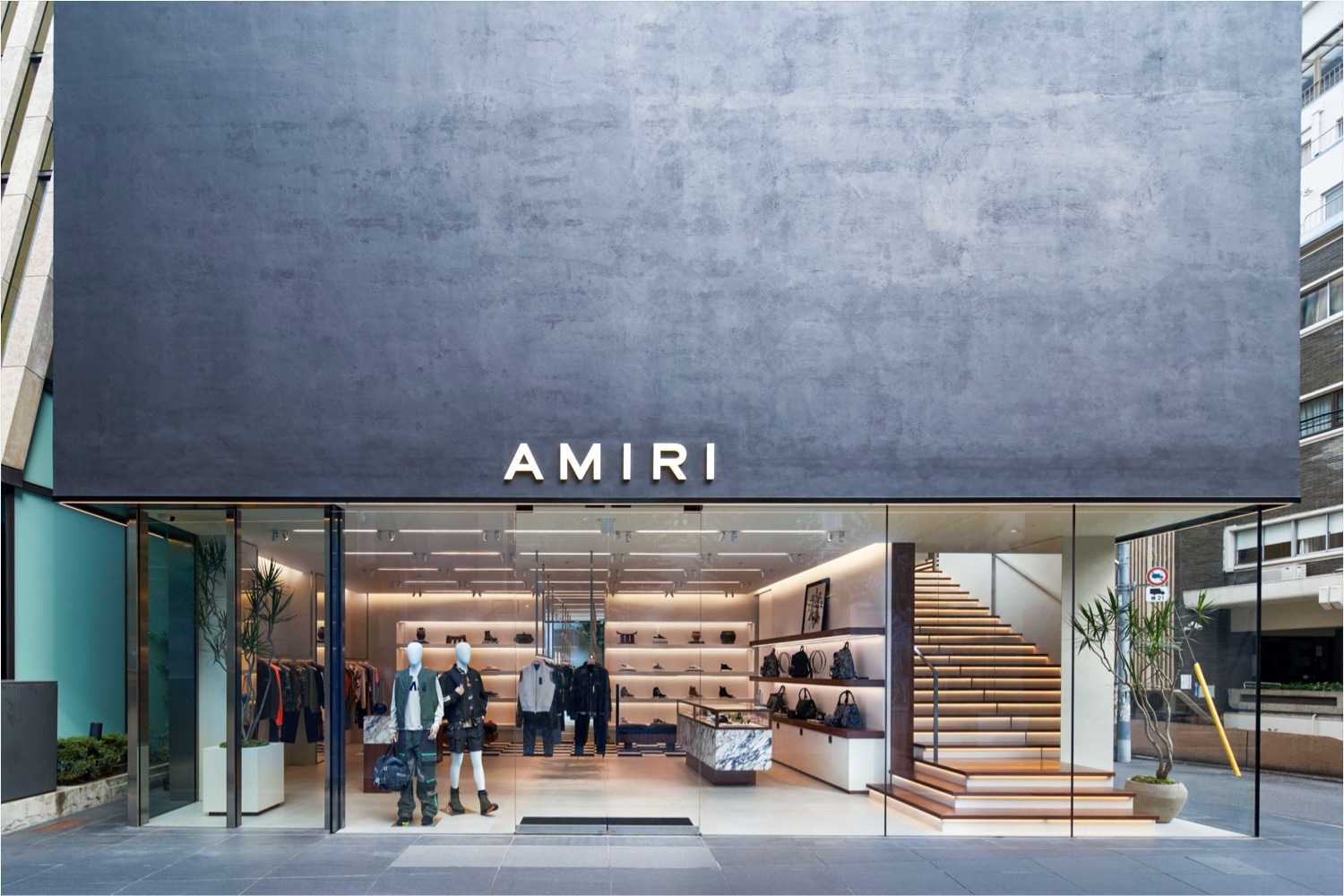
    AMIRI is a Los Angeles luxury house assembled around denim worked by hand, skeleton-appliqué sneakers and solid graphic jersey. It shows in Paris twice a year, but it is an American business with an American studio. Its identity rests on one idea: take jeans apart, then visibly rebuild them with leather, bandana print or jacquard. Readers reach this page from searches that differ sharply. The phrase amiri clothing points at the house, amiri jeans at the denim, amiri hoodie at the fleece and amiri men at the menswear the label began with. The documented version is given here, and the claims that do not survive checking are identified.

    The founder, and what is actually documented

    The founder and creative director is Mike Amiri, an American designer of Iranian parentage. One phrase is shared by his CFDA profile and the brand’s about page, which is that he began hand-crafting unique stage pieces for legendary Los Angeles performers. Because that is the whole of what either source asserts, rock clients named in retail editorial stay reported rather than confirmed. Over ten years in luxury and projects for Helmut Lang, J Brand and RRL are attributed to him by a press release dated 3 December 2014, and that is publicity, not confirmation. The same release announced his appointment as head designer of ready-to-wear and accessories at Buscemi, which almost every profile leaves out. No primary source supports the law-school backstory online, and his full legal name is not documented anywhere.

    amirii.org align=”left” />

    Two citable answers to the founding-year question

    The label is dated to 2014 by most sources, including the brand’s about page, the CFDA, its Italian minority investor and the main reference summaries. In the December 2014 press release the founding is placed in 2013 instead, in partnership with the retailer Maxfield. Both can be cited, which is why careful writing leaves the question open. Put it this way and nothing breaks: the house dates itself to 2014, and the earliest press release dates it to 2013. The launch itself is not contested: an exclusive capsule sold through the Los Angeles concept store Maxfield. The release goes further still and calls Maxfield a founding partner rather than the first stockist.

    Ownership, leadership and the financial picture

    Mike Amiri is the majority owner, so the house is still run independently day to day. A minority stake was taken in 2019, on undisclosed terms, by the Italian group OTB, which is chaired by Diesel founder Renzo Rosso. Because the percentage has never been made public, any published figure is no better than an estimate. On 1 April 2023 Adrian Ward-Rees became chief executive, arriving from senior roles at Burberry and Dior Menswear, and whether he still holds the post is unconfirmed. The widely quoted $300 million sales line is a founder statement relayed by the press, not an audited figure. Valuations and net-worth numbers circulate with no sourcing and should not be repeated.

    The real size of the retail network

    The fix here is to separate owned stores from wholesale doors, because this is the most mis-stated area in AMIRI coverage. On the brand’s own retail-locations listing there are roughly 33 boutiques, several marked as coming soon, and trade reporting counts about 31 stand-alone stores in 2026 after Milan. Wholesale works differently, with around 150 luxury accounts spread across roughly 400 points of sale and more than 160 retailers carrying the label. Much larger store counts fold those wholesale doors into owned stores and should not be repeated. The first permanent store opened on Rodeo Drive in Beverly Hills in 2020. Milan came later as the first permanent European store, with London following.

    • United States: Beverly Hills, Los Angeles, Costa Mesa, Las Vegas, Dallas, Chicago, Atlanta, Miami, New York
    • Europe: Milan, London, Paris, St Tropez
    • Middle East and Africa: Dubai, Riyadh, Cape Town
    • Asia and Latin America: Shanghai, Nanjing, Tokyo, Osaka, Nagoya, New Delhi, Mexico City

    Denim, where the house identity lives

    Denim is where the label began and remains its anchor, with repair as the operative verb. The jeans are hand-distressed and then rebuilt in plain sight with contrast material, so the finish reads as irregular instead of machine-uniform. In circulation the fits are MX1, Stack, Thrasher and Shotgun, plus the roomier Carpenter, Baggy and MA Fit cuts. MX2 is a real model name, yet its collection pages returned no live products when checked in 2026, which makes it archive-leaning. MX3 turns up only as a women’s Baggy MX3, a motocross hybrid without a waistband observed at $990, and not as a men’s high-destruction jean. Bandana and Crystal are treatments that sit on top of those fits rather than fits in their own right, which makes MX1 Bandana and Crystal Thrasher the correct forms.

    The footwear, and the bones motif

    In its own product copy the house calls the Skel Top Low its signature sneaker. A leather and suede basketball silhouette sits on a two-tone rubber sole here, carrying hand-cut bone appliqués, observed at $650. A different shoe again is the Skel Court, a canvas retro-court style carrying the same bones motif, high-top observed at $690. Stars Court takes that silhouette and exchanges bones for star appliqués, refreshed for Pre-Spring 2026. Here the MA-1 is a sneaker observed at $799 rather than a bomber jacket, even though MA-1 is the generic military bomber designation elsewhere. MA stands for the founder’s initials and heads MA Bar, MA Core, MA Quad, MA Fit and MA Skyline, while the Ryder Boot runs $1,090 to $1,290.

    Jersey, shirting and the outerwear

    The soft goods carry the same skeleton motif that defines the sneakers. The Bones Oversized Hoodie, Bones Fleece Zip Hoodie, Bones Stacked Hoodie and a Bones flannel overshirt are all confirmed pieces. As the plain option, the MA Core Logo Hoodie is a cotton pullover with the MA icon and core logo, called a normal fit and observed at $650. People constantly conflate the MA Core Logo Tee and the MA Bar Logo Tee, yet they are different products from different countries. Flannel is a founding pillar, not a seasonal add-on, and the MA Quad Bleached Flannel is observed at $1,290. Wool and leather varsity jackets and denim work jackets take outerwear higher on that same repair logic, but no flagship bomber is supported.

    Where AMIRI is made

    Country of origin varies by style, and the claim that everything is made in Los Angeles is false. The United States is the origin for the MX1 jean, the Stack jean and the MA Core Logo Hoodie. The MA Bar Logo Tee is made in Los Angeles specifically, and that covers one product rather than the whole range. The MA Core Logo Tee is made in Italy, which surprises people who assume the jersey follows the denim. Vietnam makes the footwear, the Skel Top Low and the Skel Court Hi among it. If a jean is labelled made in Italy, or a Skel-Top labelled made in the United States, look harder at the piece.

    Observed prices and structural discounting

    The figures below are observed market listings read in 2026, not an official price list, and they move. They work as bands, not as fixed points. Tees open around $425, core jeans fall between roughly $750 and $1,100, hoodies go from about $650 into the $900s, and sneakers cluster between $620 and $800. Worked outerwear, varsity jackets among it, reaches $1,800 to $2,300 and above at list. Discounting is structural rather than exceptional, with in-season reductions of 40 to 70 percent at authorised multi-brand retailers and off-price channels. That sale floor caps what the secondary market will pay, which is why resale on standard pieces sits below retail.

    Piece Observed market price Detail
    Stack jean $750 Core denim entry point
    MX1 $1,090 Pleated ovine leather set into the repair
    Women’s Baggy MX3 jean $990 Motocross hybrid, no waistband
    MA Core Logo Hoodie, cotton $650 Normal fit, cotton
    Skel Top Low sneaker $650 Signature sneaker per house copy
    Skel Court Hi $690 Court silhouette in canvas
    The MA-1 $799 Sneaker, not a bomber jacket
    Ryder Boot, leather $1,090 to $1,290 Leather, suede or python-embossed

    Claims that deserve caution

    A surprising share of published AMIRI copy reruns the same errors. The founding year is presented as settled when two sources disagree, store counts are inflated by folding wholesale doors into owned boutiques, and revenue is quoted as audited when it is a founder statement. A tiered MX ladder, each number meaning heavier destruction, is the most persistent product invention here, and it reads as search-optimised filler. Promoting treatments to fits, merging footwear names and describing the MA-1 sneaker as a jacket are all common. Finally, no official outlet exists, online or physical. A July 2021 federal complaint carries the company’s statement that it does not have an AMIRI outlet store and has never authorised any person or business to operate one.

    1. Check whether any store count refers to owned boutiques or to wholesale doors.
    2. Read named rock clients as secondary-press reports rather than brand claims.
    3. Take Bandana and Crystal for treatments, and MX1, Stack, Thrasher and Shotgun for fits.
    4. Confirm the origin on the label, since it varies from style to style.
    5. Use authorised sale prices as the reference for any resale offer.
  • Is ReelShort Videos Free No Cost to Start

    A China-Grown Format Grows a Korean Offshoot

    This vertical drama did not begin life in Seoul. The Chinese duanju scene is where it took shape: 9:16 video framed for a phone held in one hand, episodes that run one to two minutes, twenty to a hundred per title. In 2020, China’s broadcast regulator formally recognized the genre, and the export wave followed close behind, driven by apps selling weekly passes worldwide. Korean production came later, and from a different direction, which is exactly what makes it worth following. A Korean short drama is most easily defined by what it is not: not a Chinese series with a new voice track, www.reel-shorts.org/series/surrender-to-my-professor but a series written, cast and shot for a Korean audience first. The distinction sounds academic until you open up the app listings, where the two kinds sit side by side with nothing on the thumbnail to separate them.

    Dubbed Import or Homegrown Original

    For the clearest documented picture of that split, look to Jiuzhou Culture, one of the Chinese studios that pushed hardest into overseas markets. A January 2024 account of its output has the company producing more than six hundred mini-dramas for audiences abroad. Dubbed adaptations of Chinese series made up roughly eighty percent, and about twenty percent were originals produced overseas. A seventy-episode series, by the same account, came to one hundred thousand to one hundred fifty thousand dollars to make. Take those numbers together and the economics are plain enough: dubbing what you already own is far cheaper than commissioning something new, so dubs win by default. Korean originals fall inside that smaller second slice, and that is one reason there are fewer of them than a casual scroll through an app might suggest.

    He Took a Mistress I Took the Sky

    Of the two Korean titles here, this is the better documented one, and it comes with a Korean title alongside the English one. It runs on GoodShort as He Took a Mistress I Took the Sky, while the Korean title is 플라이 어게인, which translates as “Fly Again”. GoodShort records 62 episodes for it. The premise sits squarely in the revenge-and-second-chance school: for her husband, Ji-young gave up her dream of flying as a pilot, catches him out cheating on their seventh anniversary, dies in a plane crash, then wakes before the tragedy and takes the sky back. TMDB credits Park Xi-yeon and Han Gi-chan in the leads and records a first air date of March 27, 2026. Taken together, a Korean original title, a named Korean cast and a spring 2026 air date mark it as a Korean production rather than a redubbed import.

    Quiet in the Office!

    A different route to the same audience is what the second title takes. Documentation gives Quiet in the Office! as a Korean original for the platform Vigloo, where it premiered in February 2026, and it appears on GoodShort as well, with 58 episodes. A screenplay is not where it began: the series is adapted from a web novel and a webtoon, a channel Korean publishing has long used to feed television. The story tracks overworked editorial designer Kim Na-yul and her abrasive, workaholic boss Kwon Si-jin, and the leads are played by Yulhee and Lee Jae-bin. It is rated 19+, the Korean adults-only classification, worth knowing before you open it in a shared room; the rating is a fact about the listing rather than a cue to describe its contents. What counts here is the production chain: Korean source material, Korean cast, Korean platform.

    Two Titles, Laid Out Together

    Laid out in a grid, the shape of the evidence becomes visible. Both are Korean-language productions with named Korean leads. Close to sixty episodes apiece, which is unremarkable for the format and tells you nothing special about their origin. In English-speaking markets both are carried by GoodShort, which is how most readers outside Korea will encounter them. It is the last column, where documentation varies, that holds the differences: one offers a Korean original title and a database air date, the other a home platform, a premiere month and a source webtoon. No viewership figure of the kind that would let anyone rank them attaches to either, so none is given here.

    The title Home platform Episodes What happens What the record confirms
    He Took a Mistress I Took the Sky (플라이 어게인 / “Fly Again”) GoodShort 62 Ji-young gives up her pilot’s career for her marriage, is betrayed, dies, and wakes before the crash to reclaim the sky Korean original title; 62 episodes on GoodShort; leads Park Xi-yeon and Han Gi-chan per TMDB; first aired March 27, 2026
    Quiet in the Office! Vigloo original, carried on GoodShort too 58 on GoodShort Editorial designer Kim Na-yul clashes with her workaholic boss Kwon Si-jin in an office romance Korean original for Vigloo; premiered February 2026; source is a web novel and webtoon; Yulhee and Lee Jae-bin; rated 19+

    The Apps That Carry Them

    GoodShort is the common address, and it runs bigger than its Western profile suggests. Singapore New Reading Technology is the App Store seller, GoodNovel the Google Play developer name, and both listings date the launch to June 12, 2023. Google Play shows more than fifty million installs, and Media Partners Asia estimates its share of the microdrama market outside China at about six percent. Pricing follows the category: weekly VIP tiers from about $5.99 to $19.99 in the US App Store as of September 2026, plus coin packs from about $4.99 to $24.99, every figure varying by country and subject to change. Vigloo appears in our sources only as the Korean platform where Quiet in the Office! premiered in February 2026, and guesses about its size or catalogue would be padding. Look these dramas up online and you will also see third-party listing sites frequently disagreeing with official app pages on episode counts, so the app page carries the number to trust.

    What the Words “Korean Original” Really Tell You

    Useful as the label is, it is narrower than it sounds. It tells you where a series was commissioned and in what language it was performed, and very little about budget, ambition or quality. Across the category, the production math stays tight: the seventy-episode Chinese figure above sits beside Western vertical shoots reported at one hundred fifty thousand to three hundred thousand dollars, typically shot in eight to ten days. The record puts no budget figure on either Korean title, so treat any specific number you come across elsewhere with suspicion. What the label does reliably predict is texture: local faces, local office and domestic settings, plus dialogue that is written rather than matched to existing mouth movements. If you found dubbed short series distracting, that alone is the reason to seek out originals.

    Coming From K-Drama: What Changes

    If your reference point is a Korean drama made for a television slot, the first adjustment is arithmetic. Fifty-eight or sixty-two episodes of a vertical title is not a long-running serial; at one to two minutes an episode it is closer to a feature film chopped into thumbnail-sized pieces. The second adjustment is the paywall, because these apps open a series with a handful of free episodes and then charge coins or a weekly pass for the rest, and the cut usually lands on a cliffhanger. The third adjustment is tone, as compression rewards premises grasped in a sentence, so a betrayal or an office feud does the work of a slow-burn subplot. Character development happens in shorthand, and the camera stays close because the frame is a phone screen. None of that makes the format lesser, though it rewards arriving with the right expectations rather than borrowed ones.

    Where the Record Does Not Go

    Honesty about where the evidence runs out matters more in this corner of streaming than in most. What our research documents is exactly two Korean titles, He Took a Mistress I Took the Sky and Quiet in the Office!, and that is not a survey of Korean vertical production in 2026. Other Korean short dramas are certainly out there in circulation; what we can name are two we can point at with named platforms, episode counts, cast credits and dates. Treat unsourced lists of “top Korean short dramas” with that in mind, above all those recycling the same descriptions across a dozen sites. To check a title yourself, look for a Korean original title, a cast credited in a real database, a platform listing with an episode count, and a premiere date more than one source agrees on. Where all four line up, you are looking at a documented series rather than a rumor.

  • Why Marc Jacobs Handbag Is Popular Complete Walkthrough

    How these twelve were picked

    Each bag here is a style the brand currently documents, with a price checked on marcjacobs.com on 29 September 2026. No reliable aggregate customer rating exists for these bags, so hype plays no part in the ranking. A fairer way to rank the best marc jacobs bags is by how many people a bag genuinely works marc jacobs bags sale for, which is what the order reflects. Prices are US dollars in the US, and they vary by country and change without notice. Although the label is Marc Jacobs, plural, searches for “marc jacob” land here too. What follows are the top marc jacobs bags by fit, not by fame.

    1. The Canvas Medium Tote Bag

    About $198, and as a first purchase it is the obvious choice. Cotton canvas, a top zip, one interior zip pocket plus two slip pockets, at 13in by 6in by 11in. Thanks to the removable adjustable webbing strap it rides on the shoulder or across the body. What stands out is the oversized block-letter branding that reads from across a platform. The warranty excludes fading, stains and scratches, and the brand says the canvas is intended to fade and relax over time. Best as a first Marc Jacobs bag, as long as you accept that it will not stay pristine.

    2. The Snapshot

    About $325, and the bag most people have in mind when they picture the brand. The build is Saffiano leather with a faille lining, a dual top zipper and a dust bag included. At 7in by 2in by 4in, a phone, cards and keys is the honest capacity. At 57in, with a 27in drop, the removable webbing strap goes crossbody over a coat. What you notice is the signature double-J hardware, plus the tricolor blocking. The strongest single case for calling something the best marc jacobs bag, and the best all-day crossbody.

    3. The Canvas Large Tote Bag

    About $228, and if your bag doubles as a work bag this is the one. A laptop and a lunch both fit, because it runs 17in by 6in by 13in with a 9in handle drop. The Medium’s construction carries over: cotton canvas, top zip, one interior zip pocket, two slip pockets. Easy to miss online, one catch matters more than any other here. The Large comes without the removable crossbody strap that the Crossbody, Small and Medium sizes carry. Less good if you need both hands free, but best for commuting on foot.

    4. The Leather Medium Tote Bag

    About $498, the one to take if the shape has to last. Debossed branding, a chunky top zip and multiple inside pockets sit on full-grain leather. Two top handles plus an adjustable removable crossbody strap keep carry flexible. The colors currently listed run from Black and Camel through to Hot Pink, Pool and Daisy Yellow Multi. Candidly, the brand states that leather is not completely resistant to scratches and scuffs. Best for anyone upgrading from canvas who plans to carry one marc jacobs bag for years.

    5. Belted Sack Bag

    About $498, and no bag in the range is less fussy. Full-grain leather, a cotton twill lining, an internal zip pocket plus a dust bag. You open it one-handed, because it closes with a magnet rather than a zip. The adjustable belted shoulder strap gives a 12in handle drop, which sits high under the arm. The slouch is what stands out, because it collapses against the body instead of holding a rectangle. Best for days you want hands free, though a magnet is worth thinking twice about on packed transit.

    6. Scene Wallet on Chain

    About $228, and among serious evening options here nothing is smaller. It sits in The Scene, a 70-style family with its own place in the navigation. Carry happens on a slim metal chain rather than a handle or a webbing strap. Finishes vary by colorway, because materials across the line include leather, crinkle leather, suede and denim. Price is what stands out, given that most evening bags this size cost far more. Best for evening use, and a soft landing if you want a Scene bag before a bigger one.

    7. The Canvas Crossbody Tote Bag

    About $150, and that is the cheapest way into The Tote Bag line. Cotton canvas, the same as on its bigger siblings, covers the Crossbody, or Mini, size. The removable webbing strap is included here, unlike on the Large, so it hangs across the body properly. An apparent error appears in the Crossbody row of the brand’s own Tote Bag Size Guide, where the inch and centimeter figures do not correspond. When judging capacity, go by the product page figures instead of the size guide. Best under $200, and that makes it the easiest gift on this list.

    8. Scene Large Shoulder Bag

    About $698, the dearest bag in the Shoulder Bags category. That category runs roughly $198 to $698, so this sits right at the ceiling. A Grunge Faux Fur version shows near $648 for anyone who wants texture instead. Soft, shoulder-carried and with no top handle to fight with is the Scene shape. Unusually for this brand, it carries very little logo, which is the standout detail. For a buyer who wants the label to stay quiet, this is the best statement bag.

    9. The Cristina Tote

    About $398, with roughly $658 for The Grommet Charm Cristina Tote. Under Shoulder Bags is where the site files it, even though it is shaped as a tote. That tells you how it is meant to be carried, which is on the shoulder. It sits in the structured leather camp rather than the soft canvas one. Standing up on a desk instead of slumping is what makes the structure the standout detail. Among the top marc jacobs bags here it is the most grown-up pick, and best for the office.

    10. The Micro Crossbody Sack Bag

    About $198, the smallest of the Sack family. The slouchy 2022 runway silhouette comes shrunk here to essentials-only size. This really is the entry point, since the family climbs from here to about $498 for the Belted Sack Bag. It packs flat inside a suitcase, because it is soft rather than structured. The standout detail is the weight, or more exactly how little of it there is. As a second bag alongside something larger, it is best for traveling light.

    11. Snapshot E/W Shoulder Bag

    About $358, a different proposition from the standard Snapshot entirely. E/W is how the brand writes east-west, meaning the bag is wider than it is tall. Tucked under the arm, not hanging low on a strap, is where that shape sits. The Snapshot band runs from about $325 to $358, and it sits at the top. Proportion is what stands out, since it reads more considered than the boxy original. If you like the Snapshot idea but find the classic too small, this is best.

    12. The Dakota Tote

    About $798, and nothing in the Totes category costs more. A category of 47 structured styles spans roughly $278 to $798. The current assortment goes no higher, so this is its ceiling rather than a mid-range choice. Structured leather throughout, carried by the top handles. That the brand does not go higher right now is the standout detail, simply put. At this price it is worth trying the shape in a boutique first, but it is the best splurge.

    The ranking at a glance

    With its price and the buyer it fits, each of the twelve picks appears again in the table. How broadly a bag appeals is what the ranks reflect, so a low rank is not a criticism of the bag. Every price here is US dollars on marcjacobs.com in the US as of September 2026. Check before you buy, since they vary by country and currency and change without notice. Keep the receipt, and buy from the brand, a boutique, an outlet or an authorized retailer. Final sale applies to outlet stock, and the one-year manufacturing-defect warranty needs proof of purchase.

    Position Style US price Best suited to
    1 The Canvas Medium Tote Bag $198 A first bag from the brand
    2 The Snapshot $325 A crossbody for the whole day
    3 The Canvas Large Tote Bag $228 Commuting on foot
    4 The Leather Medium Tote Bag $498 Carrying for years
    5 Belted Sack Bag $498 Days with hands free
    6 Scene Wallet on Chain $228 Evening use
    7 The Canvas Crossbody Tote Bag $150 Anything under $200
    8 Scene Large Shoulder Bag $698 Standing out
    9 The Cristina Tote $398 Days in the office
    10 The Micro Crossbody Sack Bag $198 Light travel
    11 Snapshot E/W Shoulder Bag $358 An underarm shape
    12 The Dakota Tote $798 The splurge
  • Lalabet Instant Banking Opnames: Lijst van Aanbieders

    Lalabet Instant Banking Withdrachten: Volledige Lijst van Providers

    Bij online casino’s is de snelheid van het opnemen van je winsten een topprioriteit. Dit artikel biedt een gedetailleerde gids over instant banking-opnames bij Lalabet, inclusief een overzicht van ondersteunde providers, stappenplannen en veelvoorkomende problemen.

    Wat is Instant Banking?

    Instant banking is een betaalmethode waarmee spelers direct en veilig geld kunnen opnemen van hun casinoaccount naar hun bankrekening, zonder tussenkomst van een e-wallet of creditcard. Het proces maakt gebruik van beveiligde bankoverschrijvingstechnologie. De grootste voordelen zijn de snelheid – vaak binnen enkele minuten tot uren – en de directe koppeling met je eigen bankrekening, wat vertrouwd aanvoelt. In tegenstelling tot traditionele bankoverschrijvingen die 1-3 werkdagen kunnen duren, zijn instant banking-transacties bijna onmiddellijk.

    Wat is Instant Banking?

    Ondersteunde Instant Banking Providers bij Lalabet

    Niet elke bank of betaaldienstverlener biedt instant banking aan. Lalabet casino werkt samen met een selecte groep gespecialiseerde providers om deze snelle service mogelijk te maken. Hieronder vind je de meest voorkomende opties.

    Provider Verwerkingsduur Minimale Opname Maximale Opname
    iDEAL Direct €10 €10.000
    Trustly Binnen 24 uur €20 €5.000
    Klarna Direct €10 €2.500
    Rapid Transfer Binnen 2 uur €10 €4.000

    Stap-voor-stap Handleiding voor een Opname

    Het opnemen van je winsten via instant banking is eenvoudig. Volg deze stappen om een soepele transactie te garanderen.

    1. Log in op je Lalabet account en ga naar de ‘Cashier’ of ‘Banking’ sectie.
    2. Selecteer ‘Withdraw’ of ‘Opnemen’.
    3. Kies je gewenste instant banking-provider (bijv. iDEAL of Trustly) uit de lijst.
    4. Voer het opnamebedrag in en bevestig de transactie.
    5. Je wordt doorgestuurd naar de beveiligde omgeving van je bank. Authenticeer de betaling met je bankapp of codekaart.
    6. Na succesvolle authenticatie wordt je teruggeleid naar Lalabet. Je ontvangt een bevestiging en het geld is onderweg.

    Veelvoorkomende Problemen en Oplossingen

    Ondanks de betrouwbaarheid van instant banking, kunnen zich soms problemen voordoen. Hier zijn de meest voorkomende issues en hun oplossingen.

    • Vertraging: Controleer eerst of je alle voorwaarden van de Lalabet bonus hebt voldaan, zoals de omschrijvingsvereisten. Vertragingen kunnen ook optreden tijdens piekuren of weekenden.
    • Geweigerde Transactie: Dit kan komen door onvoldoende saldo, een niet-ondersteunde bank of een technische fout. Neem contact op met je bank en de klantenservice van Lalabet.
    • Provider Niet Beschikbaar: Zorg ervoor dat je je identiteit hebt geverifieerd (KYC). Sommige providers zijn niet beschikbaar totdat je account volledig is goedgekeurd.

    Belangrijke Voorwaarden om te Controleren

    Voordat je een opname aanvraagt, is het cruciaal om de voorwaarden te controleren. Zorg ervoor dat je aan alle vereisten voldoet om vertragingen te voorkomen. Alle bonussen, zoals een Lalabet no deposit aanbieding of Lalabet free spins, hebben specifieke omschrijvingsvereisten (wagering requirements) die je moet halen voordat je winsten kunt opnemen. Het is altijd verstandig om het bonusbeleid te lezen voordat je een Lalabet promo code gebruikt. Vergeet ook niet dat er opnamelimieten kunnen gelden per dag, week of maand.

  • Choosing Righteous Essentials Everything to Know

    Notable Partnerships and Drops by We Are Righteous Collaborations

    Rather than leaning on churned-out seasonal filler, the label has built its identity through deliberate, small-batch partnerships. Anyone looking closely at the brand soon realizes that its partnership pieces hold a different weight than its standalone collections — these releases usually sell faster, spark more conversation within the community, and often become benchmarks in any straightforward assessment of the brand’s body of work. This article breaks down how these collaborations function, what they have produced, and why they are significant to anyone sizing up the brand as a credible player in the independent streetwear space rather than a fleeting fad.

    By their very nature, collaborations test a brand’s values. When the brand partners with an artist, a smaller label, or a cultural institution, the resulting garments have to answer to two audiences at once — its established customer base and the partner’s own following. That friction has repeatedly forced the brand’s creative team to refine the finer points: stitching, fabric weight, and print placement all get extra scrutiny before a joint release goes live. That’s partly why the righteous hoodie remains the item most asked for whenever a new partnership is announced, since the shape has already shown its strength across numerous launches.

    Why Collaborations Matter for a Brand Like Righteous

    Indie brands rarely have the marketing budgets of big-name fashion companies, so joint releases act as a sensible method to reach new audiences without watering down the core aesthetic. For righteous clothing, this has meant teaming up with partners who share a similar yourighteous.com visual language — bold graphics, muted colorways, and utilitarian cuts — rather than pursuing collaborators just for brand recognition. That restraint is reflected in customer feedback: loyal shoppers frequently mention in reviews that joint-release items feel true to the rest of the brand’s apparel lineup instead of feeling like a tacked-on afterthought.

    There’s also a supply-chain reality behind these drops. Limited collaborations typically run reduced production runs, often in the range of a few hundred to low thousands of units depending on the partner and garment type. This restricted supply is deliberate. It preserves quality control stricter, minimizes overproduction waste, and allows the brand to try out heavier cotton blends or unusual dye processes that wouldn’t pencil out economically at bigger production scales. For a righteous clothing brand still expanding its production partnerships, this strategy has been a reasonable balance between ambition and logistical constraints.

    Collective feedback from shoppers has steered which collaborations return. Drops that sell out within days tend to get sequels or expanded colorways the following season, while less popular releases quietly disappear from the roadmap. This feedback loop is unusually transparent for a mid-sized apparel company, and it’s largely why longtime customers view we are righteous review threads as trustworthy feedback rather than advertising.

    Collaboration Categories Worth Knowing

    Not every righteous partnership takes the same shape, and it helps to break them down into rough categories based on which partners the brand chooses and the underlying purpose of the release.

    • Artist-led partnerships — exclusive graphic prints developed with illustrators or photographers, usually applied to hoodies and tees.
    • Cross-brand collaborations — joint releases with other independent labels, merging two design languages into a single capsule.
    • Cultural and community drops — partnerships tied to music events, local scenes, or advocacy groups, often with a portion of proceeds allocated to a cause.
    • Textile-focused collaborations — partnerships with textile suppliers or manufacturers to test new fabric blends before full-scale rollout.

    Each category serves a different purpose. Because the graphics are the most visually striking part of any release, artist collaborations usually draw the most attention on social media. Cross-brand releases, by contrast, often matter more to industry-watchers because they show how compatible two design philosophies actually are when forced to share a single garment. Material-focused partnerships are quieter but arguably more important long-term, since they influence what fabric weights and finishes eventually become standard across the full righteous apparel lineup.

    What Sets Righteous Drops Apart from Typical Streetwear Collabs

    A lot of streetwear collaborations lean heavily on logo placement — two brand names stacked on a chest print and little else. Righteous has generally avoided that shortcut. Rather than confining a partner’s identity to surface graphics, its collaborative pieces tend to build that identity into the garment’s construction, whether that means repositioned seams, an altered hood silhouette, or a partner-specific color story that runs through the whole piece instead of a single patch.

    This approach costs more in development time. Compared to a standard in-house release, true collaborations typically add six to ten weeks to the design cycle, since fit samples, colorways, and fabric sourcing all require approval from both sides before production can start. But the payoff shows up in resale value and customer retention — on secondary markets, collaborative righteous hoodies have tended to hold value better than solo drops, a detail that dedicated collectors watch carefully when deciding whether a new partnership is worth pre-ordering.

    Reliably, the label has shared manufacturing specifics tied to collaborative pieces, covering batch sizes and, where relevant, material origins for special materials. That transparency has significantly helped earn confidence among shoppers who were initially doubtful after reading a uneven righteous review online. It may seem like a minor operational decision, but it separates the brand from rivals who treat partnership drops as pure hype cycles with no substantive follow-through.

    Weighing Collaboration Types

    The table below details the overall traits of each partnership type the label has undertaken, based on typical production patterns observed across past drops.

    Partnership Category Standard Batch Volume Core Product Focus Buyer Interest Trend
    Artist Collaboration 300–800 units Hoodies, graphic tees Quick sell-through, strong online buzz
    Cross-Brand Collaboration a range of 500–1,500 units Hoodies, outerwear Steady demand, strong repeat interest
    Community-Rooted Release 200 to 600 units Tees, accessories Moderate demand, notable brand-loyalty boost
    Material-Focused Collaboration 150 to 500 units Base layers, hoodies Slow but consistent, favored by collectors

    This sort of comparison matters since it demonstrates that not every righteous drop is designed to move completely in a weekend. Certain releases are explicitly built for longevity and testing rather than volume, which is a more lasting model than riding buzz with every single release.

    Ways to Assess a New Righteous Collaboration Prior to Purchase

    Anyone at all considering a purchase from a forthcoming release should not be distracted by the promo image and examine a few real-world specifics first. Batch volume, material makeup, and the partner’s quality-control history all matter more than the marketing copy accompanying the release. It also helps to examine how the label has approached fit reliability in past collaborative pieces, since sizing may drift a bit when a partner’s build tendencies are blended with a recognizable shape.

    1. Review the stated production run — smaller runs move quicker but may also indicate more experimental materials.
    2. Read fabric and care details carefully, since collaborative pieces sometimes use blends different from the label’s regular lineup.
    3. Examine the collaborator’s track record — long-standing partnerships tend to result in steadier standards than single-shot collabs.
    4. Watch buyer reactions in the first 48 hours after release, which is frequently more trustworthy than pre-launch marketing.

    This process take only a few minutes but can save buyers from disappointment, especially with limited pieces that never return to shelves. Because collab releases sell fast and seldom reappear in the same form, running these checks before purchase is much more worthwhile than doing it after a piece has already vanished from stock.

    A Glimpse Forward Into 2026 Partnerships

    With 2026 on the horizon, anticipate the label to continue prioritizing a smaller number of intentional partnerships rather than a heavy stream of fast drops. This echoes input from loyal, longtime shoppers who steadily place depth of execution above frequency of drops in their we are righteous review comments. Look for continued emphasis on artist-led graphic work alongside a couple of fabric-centered collaborations intended to trial thicker, more substantial materials for chillier environments.

    For shoppers and collectors alike, the smartest approach remains the same regardless of which partner gets announced next: read the production details, compare batch sizes against past drops, and treat the hype cycle as secondary information. Righteous has built its collaborative reputation on substance over spectacle, and the brand’s continued discipline in 2026 will likely be judged by whether it keeps that standard intact as its audience — and its list of potential partners — keeps growing.

  • Ferragamo Hug Silhouette Guide For Luxury Lovers

    Finest Salvatore Ferragamo Bags for Minimalist Capsule Collections

    In a pared-down closet, the bag is often the hardest-working piece, since it needs to operate without adding clutter. Salvatore Ferragamo has spent decades establishing its standing on geometric forms, subtle metal details, and leather that ages rather than wears out. For shoppers paring their closets back to necessities, the house’s design philosophy — streamlined forms, thoughtful scale, restrained tones — integrates seamlessly with a pared-back rotation. Here, we explore the qualities that make these bags fit a minimalist approach, walks through several of the most flexible options, and offers a practical comparison to help narrow down a decision.

    Before getting into particular styles, context is useful on why this maison has turned into a benchmark for people who want fewer, better things. Salvatore Ferragamo started as a shoemaker in the early twentieth century, and that shoemaking discipline — meticulousness, form, awareness of how a piece rests on the body — transferred when the brand expanded into leather goods. This legacy is visible in the construction of these pieces: stitching is kept to a minimum, hardware is often tonal or brushed rather than shiny, and forms skew angular rather than soft. For a minimalist, that’s the difference between an accessory that clashes with a look versus one that finishes it without fuss.

    What Makes a Bag “Minimalist” in the Ferragamo Universe

    Minimalism in bag design goes beyond having no logo. It’s about scale, honest use of materials, and understated detailing. A Ferragamo bag built for a pared-down wardrobe usually prioritizes one clear, primary form — a wedge, a rectangle, a rounded box shape — rather than multiple compartments and dangling embellishments. Hardware is usually limited to a clasp, a zipper pull, or the brand’s Gancini hook, which itself has become a quiet signature rather than a loud emblem. As a result of this understatement the bag can move between a tailored office outfit and a salvatorebags.com/hug-bags off-duty pairing of jeans and an unadorned sweater without ever seeming confined to a single setting.

    The palette carries as much weight as the silhouette does. Understated leather hues — black, cognac, taupe, cream — prevail across the pieces with the broadest range in any Salvatore Ferragamo bags lineup, and understandably: they stay in harmony with the other pieces in a minimal closet built around similarly muted tones. Surface finish matters too. A smooth calfskin finish appears more polished and pared-back than a heavily grained or embossed leather, so buyers curating a pared-down collection often lean toward the smoother finishes when shopping a Ferragamo boutique, online or in person.

    Restraint around size is the last essential element. A pared-back bag seldom aims to fit it all in; its shape is dictated by a phone, a card case, keys, and maybe a slim pouch. Such a compact scale encourages an everyday act of curation that echoes the ethos of the wardrobe it’s matched to. Pieces able to move between a neat top-handle form and a bigger shoulder-strap version see the heaviest rotation, because they adapt to both errand-running and evening plans without needing a backup bag waiting in reserve.

    Signature Silhouettes Worth Recognizing

    The Ferragamo back catalogue features several silhouettes that have stayed in rotation for years because their dimensions never went out of step with changing trends. Top-handle bags built with a firm, squared-off base are a repeated motif, valued for staying upright rather than slouching rather than folding flat like a heap of leather. Flat, envelope-shaped shoulder bags with one adjustable strap are a further staple, favored by people who want something that slips under a coat without adding bulk.

    Appearing across multiple bag families, the Gancini hardware detail — a stirrup-form fastening rooted in equestrian styling — functions as the brand’s most recognizable but still understated signature. Because it’s small enough to read as a design detail rather than a label, in contrast to a bold stamped emblem, it suits minimalist dressing. Whether worked into flap closures, charm accents, or strap fittings, it adds a focal touch while keeping the rest of the design restrained.

    Deserving particular note are convertible styles. Because several Salvatore bag designs include a detachable strap, a top-handle style can become a crossbody or shoulder bag as the occasion demands. This kind of flexibility is not a minor feature for someone trying to keep their accessory collection small — it may mean one bag replaces the need for two, which is, at its heart, what minimalist dressing promises from the start.

    How to Shop Smart When Visiting a Ferragamo Shop

    Approaching a Ferragamo shop — in person or online — with a defined plan takes much of the overwhelm out of shopping. Most pared-back wardrobes tend to revolve around black, white, navy, camel, or grey, so begin by pinpointing the shades that already dominate the rest of the closet and search specifically within that palette rather than getting distracted by seasonal colorways. That one move instantly narrows the field of choices and keeps the whole process on track.

    Moving on, reflect on the length of the strap and the way the bag will actually rest against the body throughout a normal day. By contrast, a hip-skimming shoulder bag flatters structured coats, whereas a higher-sitting crossbody matches looser, roomy outerwear better. As a minimal wardrobe generally centers around just a few of coat and jacket shapes, it’s smarter to test the bag against those exact pieces rather than judging it by itself.

    Lastly, think about how the bag will be used across a whole week rather than a single outfit. If a bag solely suits evening wear, it will sit idle most of the week, contradicting the entire point of choosing fewer, more useful pieces. The most effective Ferragamo bags for minimalist dressing tend to be the ones that transition easily between a desk job, a dinner reservation, and a Saturday errand run without requiring a change of accessory.

    Sizing Up Popular Ferragamo Handbag Shapes for the Minimalist Wardrobe

    Here, four typical style categories from across Ferragamo’s bag range are broken down, with focus on shape, ideal use case, and the reason each complements a pared-back wardrobe. This isn’t an complete list of every style ever produced, but it represents the shapes most frequently recommended when people search for the best Ferragamo bags to build a long-term, low-maintenance collection.

    Category of Style Common Silhouette Ideal Use Why It Suits Minimalist Dressing
    Architectural Top-Handle Boxy, structured base Workdays, business meetings Keeps its form without slouching; reads refined with structured pieces
    Multi-Way Shoulder Bag Flat, envelope profile Everyday tasks, shifting from office to evening Detachable strap options limit the need for multiple bags
    Petite Crossbody Small, rounded or rectangular Travel, hands-free days Its limited size forces essentials-only carrying
    Soft Hobo Curved, slouchy silhouette Weekend, casual layering Relaxed shape counters structured wardrobe staples

    As this comparison shows, a consistent pattern shows up: the most effective choices for reductive dressing have in common a understated material palette and a shape that stays quiet on its own. Regardless of whether someone leans toward a boxy top-handle or a softer hobo silhouette usually depends on lifestyle rather than visual taste, since both categories can be found in the same understated leather tones.

    Creating a Streamlined Bag Collection with Salvatore Ferragamo

    A genuinely minimalist accessory collection typically doesn’t need more than three bags: one boxy piece for work, one convertible or crossbody option for daily life, and perhaps one more elevated piece for evenings out. Across the Salvatore Ferragamo bag range, building this three-bag approach is entirely realistic without overlapping function, given that the brand offers enough shape variety within its neutral color range to serve each role distinctly.

    When comparing options — whether searching under the spelling Ferragamo or even the frequent typo ferregamo — it pays to keep a running tally of the roles the bags you already own already serve. This prevents impulse purchases that duplicate what you already have, something that is a chief way that minimalist wardrobes slip back into clutter. Running a fast ferragamo bags check before you buy, comparing shape, strap style, and color against the pieces already in your closet, protects your budget and your shelf space.

    As 2026 approaches, the focus within much of the fashion world keeps shifting toward scarcer but sturdier acquisitions rather than frequent trend-driven ones. That shift plays squarely into this house’s longstanding strength: bags built on timeless proportions, finished in leather meant to develop character over years of use rather than a single season. Selecting one of the best Salvatore Ferragamo bags for a pared-down wardrobe has nothing to do with chasing the most-photographed style of the season — it’s about finding the silhouette, scale, and shade that will still feel current three or five years down the line, worn against whatever the wardrobe has evolved into by then.

  • Uptown Style Tracksuit Godspeed NY Apparel Store

    How to Use Godspeed Without Getting It Wrong

    Is it safe to say godspeed to a colleague leaving for a new job, or does it sound like a burial? That hesitation is the reason most people who know the word still never use it. It occupies an awkward register: old enough to feel ceremonial, yet familiar enough that nobody wants to get it wrong in public. Fortunately the rules are narrow and easy to learn, as the word does a single job in a handful of positions. This guide runs through the grammar, the occasions, the punctuation and the mistakes, with model sentences you can adapt. You should finish able to write it without hedging.

    Step One: Know What the Word Actually Means

    Understand the wish inside the word before you place it. Godspeed goes back to the Middle English phrase God spede, elliptical for God spede you, meaning may God cause you to prosper. The verb is the archaic sense of speed, from Old English spedan, which meant to succeed or thrive, not to hurry. Reference works place the phrase at roughly 1250 to 1300, the fused form appearing from the late fourteenth century and its use as a parting salutation established by the mid-fifteenth. The modern noun sense at Merriam-Webster is a wish for success offered to a person on parting. So in saying it you are wishing someone a good outcome, and how long their journey takes is irrelevant.

    Four Shapes the Word Can Take

    The word godspeed has fewer grammatical options than most words, and that is genuinely helpful. It works as an interjection and as a noun, and it is not a normal transitive verb, so you cannot godspeed anybody. Four shapes cover most correct uses, and each one carries a slightly different tone. The bare interjection is the warmest and the most spoken, the vocative version the most ceremonial, and the noun godspeed shirt constructions the most formal and the easiest to fit into written prose. Choosing between them comes down mostly to how much distance you want. The four sections below set out the pattern and a working example of each.

    One: Standing Alone as a Send-Off

    The simplest use is the entire utterance. Say the word, stop there, usually at the moment of parting, and let the wish do the rest of the work. That version suits a handshake, a doorway, or a last message before someone boards a flight or goes into an operating theatre. It works in speech and in brief written notes, and no supporting clause is needed. Standing alone as it does, it takes simple punctuation: a full stop or an exclamation mark, and nothing else. Brevity is the point: this version draws its power from the fact that you added nothing.

    • Godspeed.
    • Godspeed, and write when you land.
    • Whatever happens tomorrow, godspeed.

    Two: Attached Straight to a Name

    This is precisely the pattern of the most famous use in English, and it is worth copying. Scott Carpenter said “Godspeed, John Glenn” at the launch of Friendship 7 on 20 February 1962, as Glenn became the first American to orbit the Earth. Grammatically the name is a vocative, addressed directly to the person, so a comma always sits between the word and the name. That comma is not optional, and leaving it out is the single most common punctuation error with this construction. It scales just as well to titles, crews and groups as it does to individuals. It is also the most ceremonial option, so it suits speeches, send-offs and public occasions more than casual messages.

    Three: Bid, Wished or Offered, as a Noun

    Used as a noun, godspeed slots after a small set of verbs, and the register climbs immediately. To bid someone godspeed, to wish someone godspeed, and to offer or send godspeed: those are the classic collocations. An indirect object is required, so the person being wished well stands before the word, exactly as in wishing someone luck. This is the version you want in written prose, minutes, obituaries, corporate announcements and anything where a bare interjection would look abrupt. It is also the version that survives in the King James Bible, albeit in a reversed sense discussed further below. Keep the article out: you bid him godspeed, not a godspeed.

    Four: Folded Into a Longer Clause

    The fourth pattern tucks the word into a clause that explains the departure. Here godspeed carries the emotional weight and the surrounding sentence carries the facts, which makes it useful in writing that must inform as well as farewell. It usually appears near the end of the sentence, once the reason for the parting has been stated. Commas around it help when it interrupts the flow, and are unnecessary when it closes the sentence naturally. This version tolerates a longer, more formal sentence than the other three. Use it whenever a bare interjection would feel too theatrical for the document in hand.

    • The crew leaves at dawn, and everyone in the room wished them godspeed.
    • After eleven years with the team, she goes with our thanks and our godspeed.
    • We bid the departing volunteers godspeed and asked them to report back monthly.

    When the Word Actually Fits

    Register matters more than grammar with a word this old. It suits launches and expeditions, military deployments, the morning of a difficult surgery, a friend starting a company, a colleague leaving for something uncertain, and eulogies. Godspeed belongs to all of those, moments of genuine departure with some risk or difficulty attached, because the wish is for success rather than mere comfort. It also carries a dry ironic register, deployed before an unpleasant chore, which works only if the tone of the conversation already supports it. Where it fails is small talk: saying it to someone leaving for the shops is a joke whether or not you meant one. Match the size of the word to the size of the departure and it will not misfire.

    The Slips That Give You Away

    Most misuse traces to one misunderstanding about the word’s meaning, and the remainder are spelling errors. The velocity reading produces sentences that wish someone a quick journey, which inverts the sense entirely, since the original wish concerns outcome rather than pace. The possessive respelling appears constantly and has no basis in the construction, because there is no genitive in God spede. Use it as a verb and you produce sentences no editor will accept. And the biblical citation trap catches careful writers: in 2 John 1:10-11 the two-word form translates the Greek chairein and greets an arriving person, the reverse of a send-off. The list below sets out what to avoid.

    1. Never write “God’s speed,” “gods speed,” “good speed” or “godspead.”
    2. Never use it as a verb, as in “we godspeeded the team.”
    3. Never pair it with wishes for haste or a fast trip.
    4. Do not drop the comma in the vocative pattern before a name.
    5. Do not cite the King James verse as evidence for the farewell sense.

    Choosing Between Godspeed and Its Alternatives

    Now and then the honest answer is that another phrase suits the moment better. The table below places godspeed alongside the send-offs it competes with, so you can choose by register rather than by instinct. The distinctions are practical: some alternatives are warmer, some are shorter, and some carry religious content the speaker may not intend. Note that godspeed itself is not restricted to religious contexts despite its etymology, and both the capitalised and lowercase spellings are dictionary-attested. Part of speech divides the reference works: American sources lean towards the noun, British sources towards the interjection. Use the table as a quick filter before committing to a phrasing.

    Phrase Register Best used when
    Godspeed Literary, ceremonial A genuine departure carrying risk or difficulty
    Good luck Neutral, everyday Anything from an exam to a job interview
    Safe travels Warm; practical The journey itself is the concern, not the outcome
    All the best Polite and slightly distant Work partings and written sign-offs
    Go well Informal, gentle Private farewells in which ceremony would feel heavy

    A Modern Complication to Keep in Mind

    These days, searching the word turns up more than dictionaries. A New York streetwear label carries the name, so queries for a godspeed shirt, godspeed shirts or a godspeed hoodie now compete directly with queries about grammar. That matters for writers in one practical way: readers arriving at the word through god speed clothing may have no idea it is a five-hundred-year-old blessing, so a short gloss can help. Since the label publishes no origin story explaining its choice of name and no verified account of that decision exists, avoid asserting one. Keep the linguistic and commercial senses separate in your own prose and neither will confuse the other. The word survives both readings comfortably, as it has survived every other shift since the fifteenth century.

  • Genuine Studio Denim Tears Y2K Streetwear Vibe

    Denim Tears Pants and Sweatpants: A Guide to Sizing, Fit and Fabric

    Sizing goes wrong for one boring reason: labels are marketing, measurements are engineering. Two garments marked large can differ by four inches at the waistband and three at the hem, and neither is defective. A tailor’s method applies here: the cloth comes first, then arrive at the numbers worth checking before you commit. The fleece sweatpants, the twill and cotton trousers, and the denim that made the label famous after Tremaine Emory launched it in 2019 all appear below. Everything monetary here is a 2026 market estimate expressed as a range, never a fixed quote, because retail and secondary pricing move independently. Keep a tape measure to hand while you read — the point is to replace guesswork with two or three figures.

    Part One: The Fabrics

    Fit is settled by fabric before anyone reaches for a tape, and that is why it opens the discussion. Use a single pattern for heavy fleece and light twill and they hang on the body in visibly different ways. Weight also predicts how a pair ages, how much it shrinks, and how forgiving it is between sizes. The same logic applies upstairs, which is why a denim hoodie and a fleece one in the same size never feel alike. Almost everything Denim Tears makes is cotton, and the choice is deliberate rather than a matter of sourcing convenience. The material families you will actually meet across the bottoms in the line appear below.

    Fleece Versus Loopback Cotton

    Sweatpants at this price are built from either brushed fleece or loopback French terry, and the two behave very differently. Since brushed fleece carries a napped interior that traps air, it insulates well, feels soft immediately, and gains bulk after a few washes. With its loops left exposed inside, loopback terry is lighter, more breathable and more likely to drape than to stand away from the leg. The numbers to expect are 380 to 480 grams per square metre for heavyweight streetwear fleece and 280 to 340 grams for mid-weight terry. Greater weight fights off the sag that ruins cheap sweatpants, though it restricts movement at knee and seat. Where no weight is given, look closely at the cuff and waistband — dense ribbing accompanies denim tears brand dense body fabric.

    Denim, Twill and Wovens

    Wear alters denim in a way it never alters fleece, which is why the woven side works differently. Mid-weight denim of 12 to 14.5 ounces per square yard is standard for a five-pocket jean, heavy enough to fade honestly over a year or two. Break-in speed tracks weight: 10 to 11 ounces goes quickly, while anything above 15 ounces takes months to soften. Cotton twill behaves itself, holding colour and measurements with far less shrinkage or stretch. The same print cracks more visibly on woven cloth than on jersey, and some buyers actively want that. Sanforised fabric is pre-shrunk and moves perhaps one percent after washing; unsanforised raw denim moves three to five percent, an entire size in practice.

    The Cotton Wreath and the Cloth

    Most people buy these pieces for the wreath motif, and it deserves to be understood rather than treated as a pattern. Emory built the brand around a graphic referencing the history of cotton, the transatlantic slave trade and African-American experience, and that reference runs through the entire catalogue. The motif reads differently on a cotton jean than it would on a synthetic shell, because printing it on cotton is the deliberate point. Slight stiffness follows an all-over print wherever it covers, most noticeably on lighter fabrics in the first few wears. Nothing is wrong with the garment — the stiffness relaxes with washing. Heavy print coverage also makes tumble drying riskier, because heat accelerates cracking on any screen print.

    Part Two: Working with the Numbers

    Everything here presumes a pair you already own, laid flat with the seams straight and no bunching. Edge to edge across the top of the waistband, doubled, gives you the waist. Both start at the crotch seam: inseam runs down the inner leg to the hem, and front rise runs up to the top of the waistband. Measure the leg opening across the hem and double it — it is the single figure that most determines whether a pair reads as tapered, straight or wide. Nothing below is an official specification: the figures are approximate norms for oversized streetwear bottoms rather than the spec for any one release. Fit changes from drop to drop, and between fleece and woven, so the seller’s own figures should always be checked.

    Labelled Size Relaxed Flat Waist (in) Usual Inseam (in) Leg Opening (in) 2026 Estimate (USD)
    Small (S) 28–31 29–30 15–16 $250–$350
    Medium 30–33 30–31 16–17 $250–$350
    Large 32–36 31–32 17–18 $250–$350
    X-Large (XL) 35–39 32–33 18–19 $260–$360
    Denim, five-pocket cut Tagged waist, minimal stretch 32–34 un-hemmed 16–19 by cut $300–$500

    How to Measure in Five Minutes

    The routine below takes less time than reading a size chart and tells you more. Work from a pair you already wear and like, not one you merely tolerate, because the aim is to describe a fit you have already proven. A soft tailor’s tape beats a rigid metal one, which lifts off the cloth and reads long. A bed or carpet lets the fabric sink and distorts every figure, so measure on a hard flat surface. Write each number to the nearest half inch and say whether the waistband was relaxed or stretched — that distinction explains most disputes between buyer and seller. Take a third pass to settle it whenever two attempts on your first pair differ by more than half an inch, which simply means the tape wandered.

    1. Set a well-fitting pair down flat, smooth the waistband, and let the legs fall naturally without stretching the fabric.
    2. Edge to edge across the waist, doubled — note it down straight away.
    3. Keeping the tape flat against the cloth, measure the inseam from the crotch seam to the hem along the inner leg.
    4. Measure the front rise from the crotch seam to the top of the waistband, since this figure decides where the pair actually sits on you.
    5. Measure the hem opening, double it, and compare that number against the leg opening column above.
    6. Have the seller check the same four numbers on the pair you are considering, after sending yours.

    Part Three: Fleece or Woven

    Intended use settles the question, not which looks better on a hanger. The safer first purchase is fleece denim tear pants: comfort and volume arrive immediately and there is essentially no break-in period. Patience is required for Denim Tears jeans, because a raw or lightly washed pair takes weeks of wear before it moves with you. Fleece is far more forgiving of a sizing error, since an elasticated or drawcord waist absorbs an inch or two in either direction. A five-pocket jean does not forgive anything, so the tagged waist has to be right or the pair goes back. Where a denim tears hoodie is already in the wardrobe, matching the bottom to its weight keeps proportions sensible, because heavy fleece over thin twill looks unbalanced.

    Part Four: Care That Protects the Fit

    What looks like a sizing complaint after purchase is usually a laundry problem. To protect the printed panel and the elasticated components, wash cold, inside out, on a gentle cycle. Sustained heat shrinks cotton, hardens elastic and cracks screen prints, so keep the pair out of the dryer where possible. Drying flat stops the waistband stretching under the weight of wet fleece, and that stretch is permanent once it happens. Wash denim rarely and spot-clean between washes if you want the fading to develop with any character at all. Heat and hanging damage knits and wovens alike, so treat a denim tear shirt the same way. Fold bottoms for storage instead of hanging them, because gravity distorts any heavy garment left on a hanger for months.

    The Short Version

    Buy on measurements, not on the size label, and get four numbers before money changes hands. Anything lighter is a comfort choice, not a durable one: expect fleece at 380 to 480 grams and denim between 12 and 14.5 ounces. Particular drops and collaborations fall outside those ranges, but as 2026 market estimates, allow roughly $250 to $350 for sweatpants and $300 to $500 for jeans. Only the seller’s real measurements settle it — the sizing conventions above are just a starting hypothesis. Buy this year and the fit should hold for several years, provided the cloth is cared for properly. Searching denimtears listings without a tape measure is how most people end up reselling a good pair at a loss.

Privacy Overview

This website uses cookies so that we can provide you with the best user experience possible. Cookie information is stored in your browser and performs functions such as recognising you when you return to our website and helping our team to understand which sections of the website you find most interesting and useful.